

Moments in Time
1898
It began in East Nashville.
Six Methodist businessmen asked J.O. McClurkan, a Cumberland Presbyterian pastor, to lead a Bible training class for holiness workers. The Pentecostal Mission was formed. During that time, Pentecostal meant spirit-filled and was part of the broader holiness movement, separate from later tongues-speaking Pentecostal movements.
A group of 30-40 students began participating in backyard Bible classes to prepare for public evangelism on local streets, railroad stations and prisons. The group continued its Bible training but eventually also looked to expand educationally.
1901
1902
1905
Another relocation moved the campus to a building on 4th Avenue, directly behind the Ryman Auditorium.
1910
The Pentecostal Mission changed the school’s name to Trevecca College for Christian Workers. It was then renamed Trevecca College, a name taken from Colege Trefeca in Wales. The word Trevecca is rooted in a Welsh word meaning “a binding together in love.”
1914
Trevecca moved to the Percy Warner Estate on Gallatin Road in Nashville. Students attended class and then farmed on this 30-acre property to help feed each other and pay their tuition.
In the same year, McClurkan died from typhoid fever at age 52. The Nashville Banner newspaper described him as one of Nashville’s “most beloved pastors and strongest forces in upholding local moral, civic and religious standards.”
1915
Trevecca joined the Church of the Nazarene.
1917
Trevecca became the official college of the Church of the Nazarene in the Southeastern United States. The University absorbed students from the Southeastern Holiness Institute in Donalsonville, Georgia.
Early 1930s
Due to financial hardship, Trevecca held classes for students on the campuses of the American Baptist College, a Historically Black College, and Nashville First Church of the Nazarene. Some classes were also held inside Ruskin Cave in Dickson County, Tennessee. Students lived in the dorm at American Baptist College and in the homes of church members.
1935
Trevecca moved to its current location on a hill at 333 Murfreesboro Road. This thoroughfare, known as the Dixie Highway, was an auto trail completed in 1926 to connect the Midwest to the South.
Trevecca’s president at the time, A.B. Mackey, his wife, Lila Thrasher Mackey, along with several other faculty members and students, cut their way through the overgrown bush on the abandoned property with machetes to begin restoring the grounds. The abandoned buildings on the hilltop had once been the home of Walden College, a Historic Black College. The site had also housed a hospital for tuberculosis recovery and a Roman Catholic orphanage during the height of the Civil War.
1943
The administration building—one of three original buildings on the Murfreesboro Road property—was partially destroyed by fire. On that site, the Adams Building was constructed.
During this same time period, the Darda, Trevecca’s yearbook, listed the names of students shipped off to battle during World War II.
1947
Tidwell Hall was built as a men’s dormitory. It was later remodeled into a faculty center.
1954
A new cafeteria opened on the ground floor of what is now the Bud Robinson Building, replacing a previous cafeteria in the basement of McKay Hall.
1968
The University admitted its first African American student. Intercollegiate athletics began.
1969
Trevecca earned accreditation from the Southern Association of Schools under President Mark R. Moore.The Greathouse building was completed and housed both science and business classrooms.
1976
The University established the first and now longest-running physician assistant program in Tennessee under Dr. Earl Vastbinder.
1995
The Board of Trustees voted to change the name of Trevecca Nazarene College to Trevecca Nazarene University.
1998
Trevecca was approved as a level V institution by the Commission on Colleges of the Southern Association of Colleges and Schools to add the first doctoral degree.
1999
The first doctoral degree, the Doctor of Education (Ed.D.), was offered.
2000
Waggoner Library was completed and opened. The 63,000 square-foot building became the largest on campus.
2005
A bronze statue of Jesus, designed by Nazarene sculptor Scott Stearman, was installed in the middle of campus.
2011
The University offered its first Ph.D. in clinical counseling and first fully online academic program, the Master of Organizational Leadership.
2017
Enrollment exceeding 3,600 students set a new record in the fall semester.
2019
The Nashville Business Journal named Trevecca the fastest growing university in Middle Tennessee. A record total enrollment in traditional and nontraditional programs was achieved for a total enrollment of 4,124 students.
2022
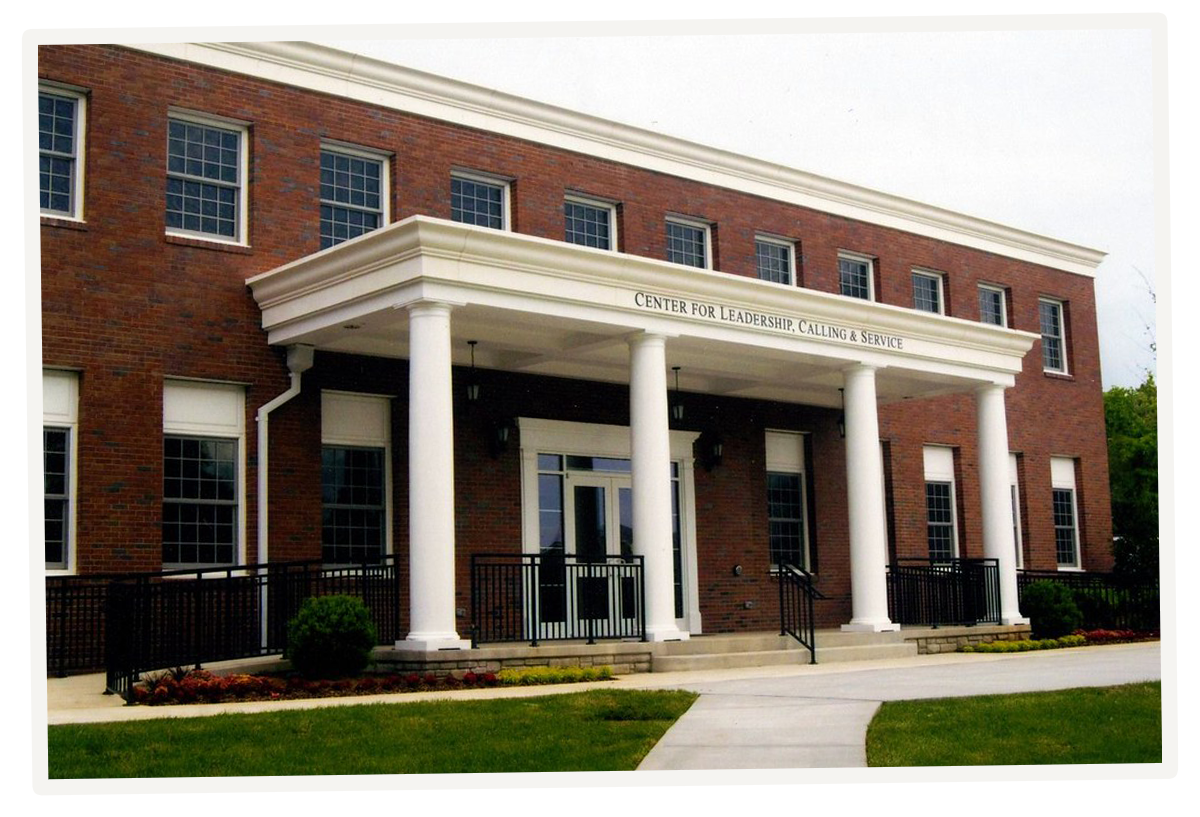
The University completed construction and opened a new Health Sciences Building while also renovating and reopening the Jernigan Student Center.
2023
The largest residence hall on campus, University Commons, opened. The University established a four-year nursing degree program.
2026
Trevecca welcomed its largest-ever group of 1,526 traditional undergraduate students to campus for the spring term.
A History of Presidents
- J.O. McClurkan, 1901-1914
- Chester E. Hardy, 1915-1919; 1920-1925; 1928-1936
- Stephen S. White, 1919-1920
- John T. Benson, Sr., 1925-1926
- Andrew Oliver Henricks, 1926-1928
- A.B. Mackey, 1936-1963
- William M. Greathouse, 1963-1968
- Mark R. Moore, 1968-1979
- Homer J. Adams, 1979-1991
- Millard C. Reed, 1991-2005
- Dan Boone, 2005-Present
