

Information Technology
Trevecca’s Bachelor of Science in information technology equips you with the web development and programming knowledge to connect, empower, educate and protect a variety of organizations and businesses. Tailor your coursework by choosing from specialized concentrations and graduate with a professional portfolio that demonstrates your skills, from front-end UX/UI engineering to back-end database processing.
Program Benefits
- Graduate with a professional portfolio and the skills you need to be competitive in a variety of careers.
- Learn from faculty who possess high degrees in their fields, who have relevant and valuable real-world experience and who make an effort to know you personally.
- Enjoy our small class sizes and supportive campus community.
- Take advantage of incredible internships and jobs available in the exciting Nashville market.
What to Expect
As a student in Trevecca’s Bachelor of Science in information technology program, you’ll learn how to connect, empower, educate and protect businesses, schools, healthcare facilities, government agencies and various other organizations with your creative and technical problem-solving skills.
Almost every industry has growing needs for information solutions. Your degree will give you a foundational understanding of information technology design so you can build data communication systems and networks, write and test code for web apps and implement plans that solve problems for your company and/or clients. From front-end UX/UI engineering to back-end database programming, you’ll gain the professional skills you need to analyze and solve problems with ethical and effective solutions.
Our IT faculty has more than four decades of industry experience, and they work hard to build mentoring relationships with you, create relevant and engaging content and provide you with exciting opportunities for hands-on learning. They’ll also help you tailor your education to match your interests and goals as you choose from one of the following specialization tracks:
- Software engineering
- Cybersecurity and digital forensics
- Data Analytics
Throughout the program, you’ll compile your many projects into a professional portfolio which can be used to provide potential employers with tangible evidence of your skills and competence.
Why Choose Trevecca?
 Founded in 1901 and a leader in online education for more than two decades, Trevecca helps students discover and pursue an individual calling by providing innovative instruction; cultivating a supportive, Christ-centered community; and establishing relationships that open doors.
Recognized nationally and locally for academic quality, Trevecca has earned a reputation for providing the world with servant leaders, problem solvers and difference makers. Trevecca’s holistic approach to education encompasses intellectual, social, emotional, physical and spiritual growth.
As a Christian university, we offer programs that explore the ways faith intersects with your field of study. This means you can gain your information technology degree in a supportive, Christian community with small classroom sizes and engaged faculty members who care about you and your goals.

Course Descriptions
Get details on all the courses you’ll complete as you work toward this degree at Trevecca.
Read More
Financial Aid & Costs
Nearly every student at Trevecca receives some form of assistance in paying for college. Learn all about the affordability of a TNU education and options for receiving aid.

Career Opportunities
With a degree in information technology, you’ll be well prepared to help meet the growing need for computer and information technology professionals in a variety of industries. Aside from incredible earning potential, your degree gives you flexibility to work in any number of settings or to pursue graduate studies. More specifically, your Bachelor of Science in information technology from Trevecca prepares you to excel in roles like these:
- Security analyst
- Web developer
- Software developer
- Database administrator
- Cybersecurity and forensics specialist/analyst
- Project manager
- Network architect
- DevOps engineer
- User support specialist
Our Information Technology Faculty
-

Peter Hsieh
Associate Professor of Computer and Information Sciences
-

Timothy Myatt
Professor, Information Technology and Management
Read Full BioDr. Myatt is professor of information technology and management and chair of the Department of Computer and Information Sciences. Prior to Trevecca, his professional career included a variety of roles in IT, including as a software engineer in ...
-
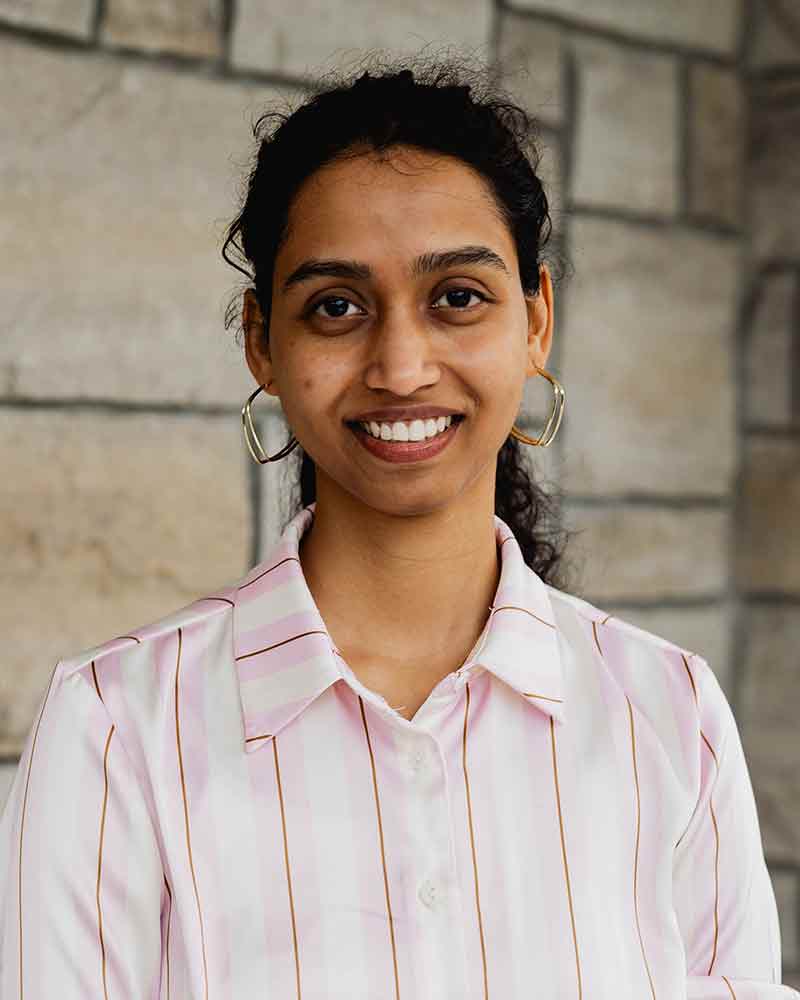
Levite Peter
Non-Tenure Track Faculty Member
-
Scott Pleasants
Director of Strategic Initiatives (CS, AI, Info Sciences)
-
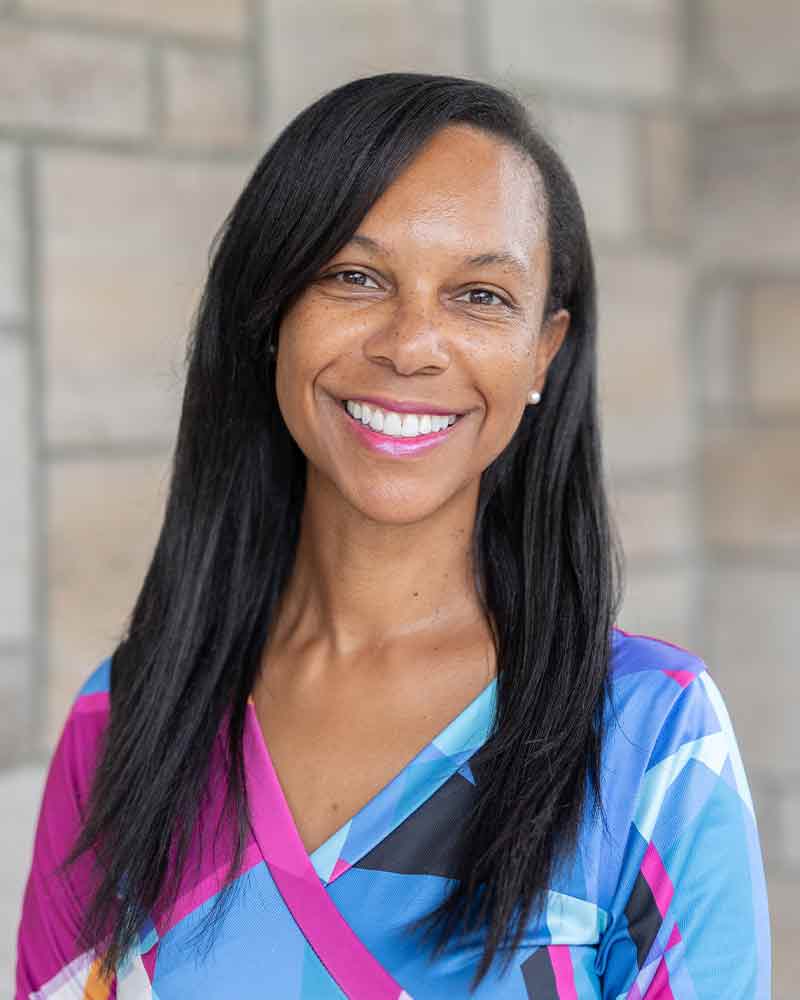
Lakisha Simmons
Associate Professor Computer & Information Sciences

Course Descriptions
Get details on all the courses you’ll complete as you work toward this degree at Trevecca.
Life Calling and Purpose
INT 1100
Empowers students to make the leap from the high school setting to the college environment. Students will begin a journey of self-awareness where they can identify their individual gifts and talents while considering how God can use their uniqueness within their field of interest. Required of all incoming freshmen, including any student that has not taken college credit after high school, and are younger than 24 years of age are required to enroll in this course. Transfer students enrolling with less than 24 hours and are younger than 24 years of age who have not taken a similar course at another accredited institution are required to enroll in this course.
English Composition I
ENG 1020
Emphasizes the recursive writing process through appropriate determination of subject, audience, purpose, and style, with correct usage of grammar, punctuation, and logical organization. Students will use appropriate technologies for writing and learning.
English Comp II: Crit Read/Write/Think
ENG 1080
Emphasizes intellectual and analytical reasoning through reading and writing assignments. Includes instruction in library and research technologies and the writing of a research project. Prerequisite: ENG 1020.
Speech Communication
COM 1010
A study of the principles and practices of effective human communication, with emphasis placed on public speaking. The course emphasizes the critical thinking and skill development necessary for effective speech. Listening skills are included in the study.
Financial Stewardship
BUS 2010
Provides the student with a basic understanding of his or her economic environment and the basic principles and tools of personal financial management. Emphasis will be placed on personal financial planning, including budgeting, managing personal debt, insurance taxes, investments, and real estate. When possible, topics will be analyzed and discussed from a Christian perspective.
Introduction to Health & Wellness
HPE 1500
Designed to assist the student in their understanding and development of a healthy lifestyle. Emphasis is placed on the components and behaviors that promote lifelong, positive outcomes in the five dimensions of wellness: physical, emotional, intellectual, social, and spiritual. Includes a fitness laboratory component. Fee charged.
Problem Solving:Reasoning Approach
MAT 1080
This course is designed to promote students' understanding and appreciation of mathematics and to develop quantitative and problem solving skills. The course will further introduce students to a wide range of applications of mathematics to modern life. Topics will be selected from linear and non-linear models, logic, sets, probability, counting techniques, statistics, matrices, and game theory.
Issues in Science
SCI 2600
An introduction to themes in the natural sciences that have significantly impacted our world. Among the themes discussed are relativity, modern cosmology, evolutionary thought, biotechnology, advances in modern medicine, biodiversity, and the use of natural resources. Scientific discoveries will be approached with both a historical perspective and a consideration of current and future applications. Interactions of scientific thought and the Christian worldview are considered.
Life Science
SCI 1500
A study of biological concepts including the chemistry of life, principles of inheritance, evolutionary theories, biological organization of various organisms, and relatonships between organisms and their environment. Issues related to current advances in biotechnology and medicine are also considered. The process of scientific inquiry is emphasized and practiced in both the lecture and laboratory. Fee charged.
World Literature
ENG 2000
Designed to engage students in dialogue with a variety of Western and Non-Western world literature, past and present. Prerequisite: ENG 1080.
Introduction to Biblical Faith
REL 2000
An introduction to Biblical faith and literature designed to help the student acquire a knowledge of the basic content of Scripture as well as be able to employ basic Bible study skills.
Christian Tradition
REL 3000
An introduction to theology as it has developed in the history of the church with a view to understanding the relation between faith and life. Special attention is given to understanding the doctrine of holiness.
Christian Life and Ministry
REL 4000
An integration of Christian spirituality, life, and ministry. Through a wide variety of readings and experiences, care is given to evaluate the spiritual structure of the students and to understand spiritual gifts, disciplines, and what it means for each individual to be a constructive influence in the Church and society.
Fine Arts
MUS 1500
Designed to give students a historical perspective of music, art, sculpture, and architecture from ancient times to modern times.
Introd. Entrepreneurshp & Small Business
BUS 2300
Designed to teach the student concepts and skills needed to succeed in an entrepreneurial venture. It will include understanding unique characteristics an entrepreneur should posses, and it will view marketing, economics, finance, accounting, management, communication and legal issues from a small business perspective.
Applied Logic and Mathematics for Computing
ITI 2540
The symbiotic relationship between the computing disciplines and mathematics has a long history. The foundations of hardware, software, networks, security, and digital multimedia rooted in theoretical and applied mathematics. This course will explore the mathematics of basic algorithm analysis, data structures, Boolean logic, sets, relations, functions, countability, computability, and complexity as applied to the computing domains. Special emphasis will be given to the practical applications of the binary and hexadecimal number system across the computing disciplines and the development of the theoretical finite state automation.
Business Analytics and Intelligence
ITI 3250
: Most organizations collect large-scale data sets that must be processed by computers in order to create meaningful and actionable intelligence. Through practical problem solving, students learn to transform raw data into strategic information that supports informed business decisions using modern analytical tools. Prerequisites: MAT 1350 or MAT 3000 or PSY 2060 or BUS 3020
Foundation Software Design/Developmet
ITI 2160
Technology shapes modern life, culture, and business. This course introduces the fundamental principles behind today's digital systems and the role of software design and development as a core problem-solving skill and tool. You'll explore how code powers everything from social media to commerce and learn creative, scalable approaches to building technology that drives business growth in the digital economy. Fee charged
Founddation of Web Design & Development
ITI 2170
The world-wide web powers modern communication, business, and global access to computing. This course teaches the fundamental principles of web technologies and development through project-based experience. Students will learn major scripting languages, visual design principles, and digital design tools for professional websites that enhance real business environments. Fee charged.
Foundation Data & Database Management
ITI 2180
Computing relies on storing, processing, and interpreting binary data-the foundation of all digital information and software. This course builds a core understanding of how data is represented, stored, retrieved, and moved across applications, operating systems, networks, and databases whether the data is structured or unstructured. Through hands-on exercises, students will practice analyzing, organizing, and transforming digital data. Fee charged.
Foundations of Cybersecurity & Forensics
ITI 2380
Cyber threats to business and personal data make security a critical priority. This course introduces key cybersecurity challenges and the methods used to protect modern environments. Students will explore network threats, physical security, access control, encryption, data integrity, forensics, penetration testing, and business continuity. Through hands-on exposure to core tools, students will build practical skills for securing IT systems. Fee charged.
Foundations of Networking Infrastructure
ITI 2190
This course introduces key network architectures, infrastructures, protocols, and configuration concepts across physical and virtual environments. Students will explore wired and wireless networking, virtualization, network hardware, communications software, and the Internet Protocol. Through hands-on learning, they'll gain the skills needed to design, manage, and support complex modern networks. Fee charged.
Programming in Java
ITI 2400/PHY 2100
The world is composed of objects of various kinds that interact with one another. Gaining an understanding of how to program using the perspective of objects will help the student to develop software that will be understandable and reusable. Students will explore features of object-based design and development using Java including UML, encapsulation, polymorphism, and inheritance. Java has gained a significant foothold in nearly every facet of technology in society and learning to program with it will provide a solid foundation for those wishing to pursue a knowledge of other object-based languages. An introduction to writing event-driven graphical interfaces will provide students a solid foundation for creating interactive software.
Elementary Data Structures & Algorithms
ITI 2450
This continuation of object-oriented programming foundations introduces the student to the basics of asymptotic algorithm analysis and fundamental data structures like linked lists, stacks, queues, and iterator abstract data types. Simple sorting, searching, and selection algorithms will permit the student to apply their programming skills to intermediate-level applications.
Hardware and Operating Systems
ITI 2640
Core hardware and operating system concepts, including components, file structures, memory, scheduling, and peripherals are investigated. Students gain hands on experience installing and working with Windows, MacOS, and Linux, as well as tools and techniques for networking diverse platforms. The course builds practical skills for maintaining multi OS environments and supports preparation for A+ certification.
Portfolio Assessment I
ITI 3975
The Portfolio I course is designed to prepare students to create a digital online presence in order to competitively position themselves in the marketplace. Students are prepared to develop a communication and presentation strategy that best suits their career goals. Prerequisites: 18 hours of computing-related coursework.
Information Technology Internship I
ITI 4900
The IT internship offers deep learning and mentoring in an IT-related applied setting for which students receive academic credit under the guidance of the university "Learning Contract". The applied experience is onsite at an outside employer. The internship requires the onsite supervisor to establish written expectations for a project-based experience, meets regularly with the student, and provides a written evaluation using a format provided by the university. At 55 hours per credit hour a 3 credit hour work experience will result in 15 hours per week per semester(165 hours total), or 4 weeks of full time. Prerequisite: 18 hours in computing-related coursework.
Portfolio Assessment II
ITI 4975
This senior presentation course is the culmination of your studies, meant to help you demonstrate talent, skills and presentation, and communication abilities. This experience will not only provide you the opportunity to begin honing your skills in presenting your work to be used for expanding your career, but it will allow you to receive feedback from experienced designers and developers from the industry on ways you can improve your portfolio as you begin your job hunt. While it is critical to show finished work which reflects strong concepts, design and technical abilities, it is also important to be able to demonstrate the process used to create the work along with the reasoning which led its final form. Each senior is allowed to present 4- 5 projects. These projects can have multiple components but, in total, can't exceed a total of 10. Presentations are to be, at least, 10 minutes and no longer than 15 and are to be made digitally online or with a projector. The presentation should cover your creative process from beginning to end. Prerequisties: ITI-3975.
Senior Seminar in Computing
ITI 4980
The senior seminar is a learning space where students actively evaluate and critique the questions, controversies, and complexities of the information technology and computer science disciplines. While developing disciplinary and research skills, students lead discussions that explore current topics and challenges of intellectual importance. The seminar is facilitated by the faculty member with the goal of preparing students for academic research and professional success.
Foundations of UX Design
ITI 2140
Deeply rooted in the success of digital experiences is a key intersection between psychology and sociology. User Experience design (or UX Design) is the study and practice of the psychological and design principles of how users interact with interactive systems. This course is a formal study of human computer interaction, information architecture, and usability design. Students will learn analysis and design techniques that will help them to evaluate users, styles, tasks and other factors of the human-computer interface. The course proviedes a foundation for students to be able to build effective computer interfaes that support human needs and improved productivity. Students are also introduced to UX History and current research. The total spectrum of human-computer interaction is contained within the field of User Experience design. This course focuses on the interactive design process in order to generate rapid prototypes that are used to steer business and product design decisions. This course will teach students how to take a concept from prototype to digital product. Students will learn how to transform ideas into tangible reality. Students will learn how to develop user stories and user tasks that will be utilized for the shaping of the product definition and functionality, while at the same time learning how to build a design and a development roadmap.
Foundtn of Virtualztn & Cloud Computing
ITI 3010
Virtualization underpins modern distributed systems, cloud computing, and scalable global infrastructure. This course introduces the principles behind virtualized hardware, networks, and software, along with cloud service models such as IaaS, PaaS, and SaaS. Students will gain hands on experience implementing and evaluating cloud based services, exploring their architectures, advantages, limitations, and common business applications.
IT Project Management
ITI 3150
Organizations increasingly rely on effective management of large technology projects. This course teaches core IT project management fundamentals using methodologies such as ITIL, Agile, and Six Sigma. Through case studies and practical projects and exercises, students learn time, performance, and cost estimation, explore each project phase in depth, and gain experience with project management software.
HISTORY (CHOOSE ONE)
World Civ: Ancient & Medieval World
HIS 1400
A course of study from ancient times to the 1500s dealing with persistent and recurring political, social, and economic issues in history that thinking people have examined and that have shaped our contemporary world. This course covers Western and non-Western cultures.
World Civ: Early Modern & Modern World
HIS 1450
A course of study from the 1500s to the present dealing with persistent and recurring political, social, and economic issues in history that thinking people have examined and that have shaped our contemporary world. This course covers Western and non-Western cultures.
PHILOSOPHY (CHOOSE ONE)
Introduction to Philosophy
PHL 2010
A general introduction to the study of philosophy, both Western and non-Western. The course is organized around three domains of philosophical reflection; metaphysics, epistemology, and ethics. Representative philosophers from Socrates to Confucius will be used to illuminate the philosophical task. The course also includes discussion of world religions as representatives of non-Western philosophy.
Ethics
PHL 3070
A philosophical analysis of the narratives and principles that have contributed to moral and ethical norms for human action.
CHOOSE ONE OF THE FOLLOWING
Interpersonal Communication
COM 2010
A study of two-person (dyadic) communication. Topics include: human communication theory, verbal and nonverbal codes development of self-concept, perception, impression formation, and relationship developement. Preferred prerequisite for all courses leading to an Interpersonal Comunication major.
General Psychology
PSY 2010
General introduction to major areas of psychology with emphasis on the psychological bases for understanding human behavior. A recommended prerequisite to other psychology courses except PSY 2175.
General Sociology
SOC 2010
The nature and functions of sociology, the development of social ideas and institutions and the processes of social interactions and social structure.
Choose a Track
Cybersecurity and Digital Forensics
TRACK
This course in digital forensics takes the approach that there has been an attempt to breach your organizations data or individual systems, or there has been an actual breach. This process of forensics includes the mothods and means necessary to determine who, what, where, when and how a brach occurred. This course will cover the methodological, scientific, technical and legal matters as they relate to digital forensics. Prerequisites: ITI-2380
Credit Hours: 3The security arena is made of vulnerabilities, threats, attacks, loss of data, viruses, trojans, etc. The issue is frequently a matter of detecting that an instursion or an attempted instrusion took place. Once it has been determined that an intrusion has occurred, it is necessary to manage the crisis both internally and externally. Many requirements for reporting exist and this course will cover the basics of both crisis management as well as determination of the extent of the security failure. Prerequisites: ITI-2380
Credit Hours: 3This course is designed to be a general overview of security on the Internet and networked systems through the architecture of the organization. The issues facing security personnel relative to the network are ubiquitous. The techniques that provide security through cryptography and other options that encrypt data and communications are discussed in this course. Being anonymous is not possible given the number of tools available to the hacker, but the ability to be as anonymous as possible and to secure the data will be discussed as a means to make it difficult for the hacker to achieve their goal of viewing the data within the organization. Prerequisites: ITI-3670 and ITI-3690,
Credit Hours: 3Information assurance addresses the need to know the network and the information available on the network, both internal and external to the organization. Through a study of the various aspects of confidentiality, integrity and accessibility, this course will present the concept that the information must be protected at each level with the proper level of security, but the first step is determining what data is available, such as email, calendars, chat rooms, Internet access, etc. and then determining the level of security that is applicable to each. Control is the key to assurance, but recognizing the components of the system because a tool that can be audited, verified, and controlled. Prerequisties: ITI 4070 or permission of instructor/program director.
Credit Hours: 3
Software Engineering
TRACK
Object-oriented programming features are expanded and enhanced to design robust and scalable software that is aware of resource-conscious interactions with hardware. Emphasis is placed on memory management through the use of pointers for indirect data access. Event-driven programming and graphical user interface development are introduced through interactions with software subsystems and libraries in the building of interactive software applications.
Credit Hours: 3This continuation of object-oriented programming introduces the student to more advanced asymptotic algorithm analysis and complex data structures like doubly linked lists, general and binary trees, priority queues, and traversal algorithms of trees and graphs. More complex data structures and algorithms like mappings, hash tables, and complex sorting may also be studied and implemented.
Designing software is an integral part of engineering a software product. Poor design will lead to poor results introducing the users of the software to many risks. In this course students learn to effectively design software to ensure that a developed product can provide the requested functionality and performance while allowing for maintainability and scalability. Fundamental principles and guidelines for software architecture design are introduced including architectural styles, patterns, and frameworks. Students will learn to use methods, techniques and tools for describing software architecture and documenting design rationale and, for performing software architecture design and evaluation. Prerequisites: ITI-3320 and ITI-4150
Credit Hours: 3We live an a compleex society comprised of many systems. Acquiring an understanding of how systems as a whole are designed, created, and maintained is essential for the individul who wishes to make a contribution in the area of systems development. In this course the focus will be on the software engineering aspect of systems where they are implemented by applying the fundamental software engineering life cycle process from requirements specifications to testing of a completed software system. Software development will allow students to implement a software system design regardless of the programming language that is chosen. Prerequisites: ITI 4160.
Credit Hours: 3
Data Analytics
TRACK
This course will expose students to the data analytics practices executed in the business world. Students will explore such key areas as analytical processes, how data is created, stored, accessed, and how the organizations work with data and to create environments in which analytics can flourish. This course will provide students with a strong foundation in all the areas that support analytics and will help students to better position themselves for success within their organization. Prerequisite: Earning a B or better in BUS 6073 Business Analytics.
Credit Hours: 3General Electives — 4-5 hours
*This program also includes an Institutional Choice and Intercultural Literacy Requirement.
*For a complete list of courses, tracks and other relevant information, view the program's course catalog.
Related Articles
-

Here’s How Trevecca Prepares You For Some of the Best STEM Jobs
Explore how Trevecca Nazarene University prepares students for top STEM careers with hands-on experience, academic rigor and a ...
Read More
Related Programs
-
Computer Science
The Bachelor of Science in computer science prepares students to translate business needs into software solutions. Students gain skills in logic, algorithms and computational thinking as they learn to code, program, design and utilize state-of-the-art software and technologies. Specialization is offered through one of the following tracks: software engineering; cybersecurity and digital forensics; or Data Analytics.
Learn More
